
Grayish and Alpaca: the documented difference
Grayish has an LRV of 60; Sherwin-Williams Alpaca SW-7022 is 57. The difference is 3 points, with Grayish returning more light under the reference measurement. Choose by the material relationship as well as the number. Grayish's red-violet undertones make a violet impression a relevant consideration rather than a failure to look like its name. Alpaca is a warm gray with a beige influence.
| Color | Brand / code | LRV |
|---|---|---|
| Grayish | Sherwin-Williams SW-6001 | 60 |
| Alpaca | Sherwin-Williams SW-7022 | 57 |
The choice beside gray tile and ivory upholstery
Gray tile is a permanent neighboring color, so any persistent red-violet tension there deserves more weight than the neutral label.
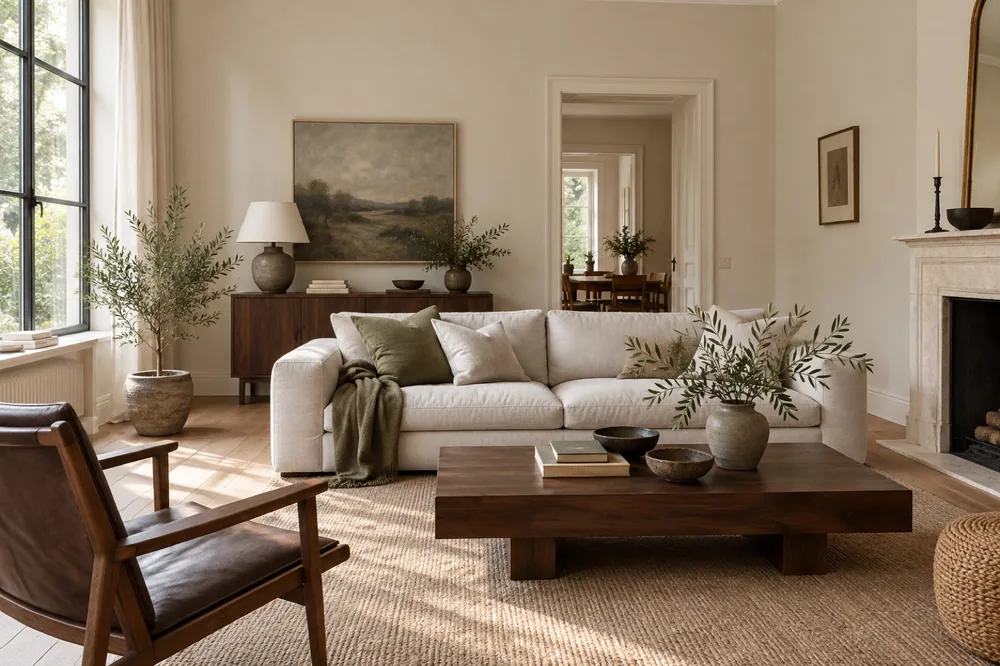
Set up both candidates with gray tile and ivory upholstery. Use equal-sized boards with the intended finishes and place them in the same orientation. Do not put one directly beside a window and leave the other in shadow. A difference that follows the position rather than the board is a lighting observation, not evidence that the formula changed.
What the comparison can—and cannot—settle
The alternative Modern Gray has an LRV of 62.
Check the red-violet influence beside the tile; keep it only if that secondary color is welcome. Assess Grayish and Alpaca alone as well as side by side. The unchosen board will not remain in the finished room, and a preference created only by that neighbor may not survive its removal. Before ordering samples, compare room-planning features in the paint color visualizer roundup.
Sources & notes
Color specifications: Sherwin-Williams Grayish SW-6001. The recorded LRV is 60. Named comparison values come from the respective manufacturers; material schemes are editorial suggestions.
This guide reviews published color information and proposes practical sample checks. It does not claim first-hand paint testing or customer-review scores. Sherwin-Williams does not sponsor or endorse this site. Product names and trademarks belong to their respective owners. Confirm the color in a physical sample and select the coating for the actual surface and finish.